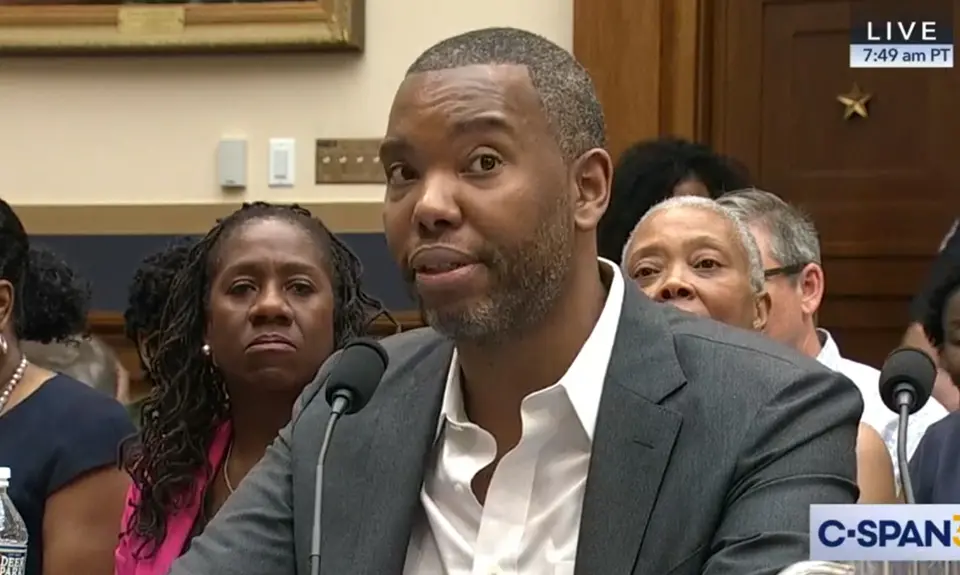
On June 19, the commemoration of the last day of slavery in the United States, Congress held the first-ever hearing on a bill on reparations for African Americans. Bill H.R 40 proposes the creation of a commission to study and develop proposals for African-Americans that would examine both the rationale for reparations and the means of accomplishing it.
The case for reparations lies in the extension of terror, exploitation, and disregard of African Americans' humanity that has its historic roots in slavery and ongoing discrimination to the present. Discrimination and racism throughout history are clear in the Jim Crow laws of the Reconstruction era and the subsequent racial segregation in education, housing, employment, and other institutions. It is evident in voter suppression, mass incarceration, the disproportionate impact of police brutality on Black people, educational disparities for Black students, Black women’s maternal mortality, the racial wealth gap and in a host of discriminatory policies and social practices. Indeed, white supremacy is deeply embedded into American policies, systems and culture.
And as several of the witnesses made clear, these issues are interrelated: we must fully understand the magnitude of the systemic racial oppression born out of slavery to be able to discover remedies to help dismantle centuries of racial injustice.
A panel of speakers including Sen. Cory Booker (D-NJ), writer Ta-Nehisi Coates, actor Danny Glover and economist Julianne Malveaux, spoke on these issues during the hearing. There, they and others spoke out about the importance of understanding the economic weight of slavery and discrimination. Malveaux expounded on slavery’s economic impact on the Black community’s ability to build wealth, pointing to how the exclusion of Black Americans from federal programs later informed contemporary issues like the use of bail that maintain the economic divide today.
To mitigate these disparities, reparations advocates propose measures such as zero-interest loans for Black homeowners and free college tuition. If the bill passed, H.B. 40 would create a commission to further examine the best ways to bridge the racial gap in the United States.
One primary argument against reparations – and one used by Republican Sen. Mitch McConnell of Kentucky recently – is that those who are “currently living” are not “responsible … for something that happened 150 years ago.” Coates issued a strong response:
“He was alive for the redlining of Chicago and the looting of black homeowners of some $4 billion … Victims of their plunder are very much alive today. I am sure they would love a word with the majority leader … While emancipation dead-bolted the door against the bandits of America, Jim Crow wedged the windows wide open … That’s the thing about Senator McConnell’s ‘something.’ It was 150 years ago, and it was right now.”
Preventing African Americans from resources, power and equitable opportunity continues to limit our families and community today and in the future. In spite of this, some African Americans were able to achieve a version of the American Dream, but for the few who did, “there are so many thousands gone.”
It’s not unfair to ask that these injustices be offset. Although a reparations program cannot fully erase the stain of slavery or the continuation of institutionalized discrimination that continues to linger today, it would be a step toward reconciliation and the ownership of responsibility for the wrongs done that still persist today.