Earlier this month, voters across the nation issued a repudiation of historic proportions to the Trump administration and its enablers in Congress. Like after Watergate, Americans saw corruption and abuse of power, and they said “enough.”
But it has apparently not been enough for Senate Republicans.
In the dwindling days they hold power, the outgoing Judiciary Committee majority is engaging in the exact kind of corruption and abuse of power that the nation just rejected. Those with political connections don’t have to follow the rules that apply to everyone else. Instead, they are being offered jobs for life, where they can exercise power over the rest of us.
On November 18, the Judiciary Committee is holding a nominations hearing for the second consecutive week. This is a sharp departure from the norm. Majorities of both parties have historically recognized that the seriousness of vetting lifetime judicial nominees requires giving senators time to analyze their records. So hearings are held every other week, at most, unless the minority party consents.
In this case, the Democrats didn’t consent.
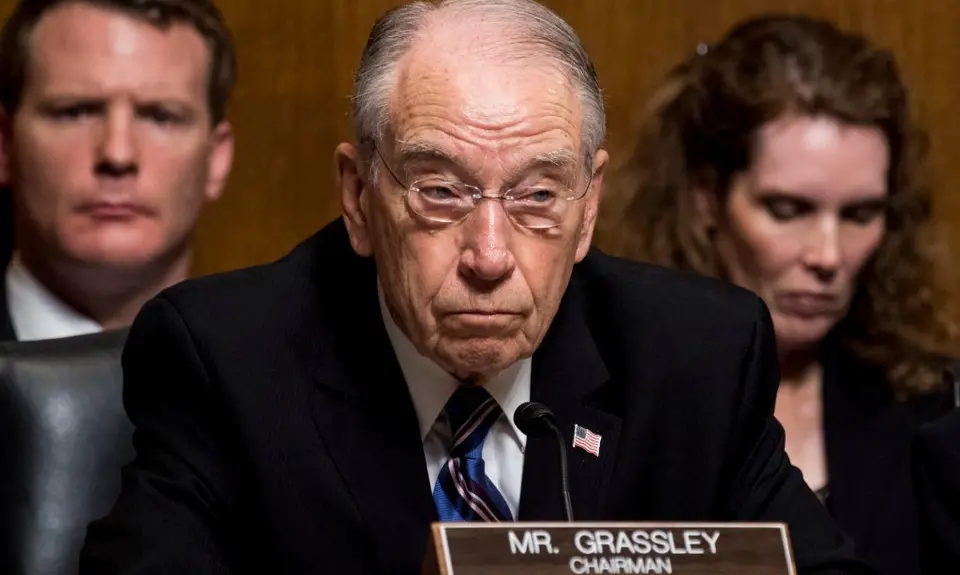
And the Republicans didn’t care. Chairman Grassley scheduled the hearing anyway.
But it gets worse: Not only is a hearing being jammed into the schedule, it will feature eight nominees, more than the norm. This gives committee members even less time to review each nominee’s record.
Yet even that is not the worst of the norm-breaking designed to get right-wing judges onto the bench without adequate vetting.
Normally, the chairman doesn’t schedule a hearing for a judicial nominee until committee members have had four full weeks to review their records. But that important safety valve has been switched off not just for one, or for two, but for three of the nominees up this week.
Senators will have had only two weeks to review the record for James Sullivan, nominee for the Western District of Texas. They will have had just ten days to go through the record for Northern District of Texas nominee Elliot Gaiser. And for Cody Hiland, the brand new nominee for the Eighth Circuit, committee members will have only seven days to look through his record.
Those three nominees alone have submitted over 6,000 pages for senators to read and analyze. That comes on top of the voluminous records for the other five people whose hearing is on the same day.
So who are these nominees who get to bypass the committee’s longstanding rules?
Cody Hiland is the former chair of the Arkansas Republican Party. Senators John Boozman and Tom Cotton wanted him to get the Eighth Circuit nomination. In fact, Hiland had thought he was going to be nominated. But Trump nominated Lee Rudofsky instead. Rudofsky had his committee hearing back in September, and he was up for a committee vote last week. It seemed that Hiland was out of luck, as another arch-conservative was going to get the judgeship he wanted.
But it helps to have friends in high places. The Arkansas senators lobbied behind the scenes to sabotage Rudofsky’s nomination. Last week, Trump withdrew Rudofsky’s nomination and announced that he would nominate Hiland instead.
Gaiser’s nomination was also last-minute. Starting next year, under the committee’s blue slip rule, no district court judge from Texas will be confirmed without the support of newly elected Sen. James Talarico. So Ted Cruz scrambled to undercut Talarico and the people of Texas.
The day after the midterm elections, Cruz asked Gaiser if he wanted to be a judge in Texas. He did this even though Gaiser has minimal connections to Texas and had not gone through Sens. Cornyn and Cruz’s Federal Judicial Evaluation Committee like every other Texas nominee. But Gaiser had been a vocal supporter of Cruz’s presidential campaign in 2016. And he had already shown his MAGA bona fides as the head of the Justice Department’s Office of Legal Counsel. So a few days before the last committee hearing of the year, he got the nomination.
Sullivan had a similar last-minute opportunity handed to him. He is a justice on the Texas Supreme Court who lost his bid at reelection. But he doesn’t have to worry about being out of a job. A few days after the people of Texas made clear that they do not want him as a judge deciding their legal rights, they learned that Trump was going to nominate him to be a lifetime judge in the Western District. So they won’t be able to vote him out this time.
The Republicans’ abuse of power is enough by itself to warrant opposition to these nominees. But the records of these and the other nominees at the hearing show why they should not be confirmed as federal judges.
Elliot Gaiser (Northern District of Texas): As the head of the Office of Legal Counsel, Gaiser is responsible for Justice Department memos purporting to provide Trump with legal justifications to engage in lawless behavior. That includes murdering hundreds of people on the high seas, waging an undeclared war against Iran without congressional authority, and kidnapping the president of Venezuela.
James Sullivan (Western District of Texas): Sullivan’s state supreme court campaign website made clear his intention to rule in favor of conservative Republican interests as a judge. It prominently features a photo of Sullivan in his official judicial robe, smiling and shaking hands with Texas Gov. Greg Abbott. Parties litigating a case against the Abbot administration could understandably doubt that Justice Sullivan would be an unbiased jurist.
Philip Aubart (Middle District of North Carolina): As First Assistant U.S. Attorney, Aubart has played a key role in the notorious politically motivated prosecution of James Comey for posting a photo of seashells. Aubart’s willingness to abuse the fearsome prosecutorial powers of the United States to pursue Donald Trump’s personal vendettas disqualifies him from judicial service.
Eric Hamilton (District of Nebraska): He is a Trump II Justice Department lawyer who defended the administration’s lawless effort to shutter a federal consumer protection agency without congressional authorization. The judge in the case wrote that Hamilton’s statements to her were “so disingenuous that the Court is left with little confidence that the defense can be trusted to tell the truth about anything.” This led to the filing of ethics complaints against him.
Grayson Lambert (District of South Carolina): Lambert left his position as a law firm partner in 2021 to represent South Carolina Gov. Henry McMaster. In so doing, Lambert was choosing to advance a particular political agenda through the courts. In this capacity, he defended the ability of the Republican legislators to use ruthless partisan gerrymandering to deprive people of political power based on their political beliefs; defended a congressional map that a three-judge panel held was a racial gerrymander; and defended the state’s decision to collaborate with the Trump administration’s unlawful efforts to rig the 2026 midterms.
Trump’s latest nominees were not selected because they will fairly apply laws protecting working people and consumers from abusive corporations. Nor were they chosen because they will protect people against abuses by the government. They were chosen because Donald Trump and Senate Republicans expect them to use their judicial positions to advance the MAGA agenda.
For the past two years, while Republican congressional majorities have cheered on Trump’s lawless actions, federal judges have bravely and heroically checked his attacks against our freedom – just as our nation’s founders intended.
But Trump does not share our founders’ vision of the courts. He is a president who misleads and even defies federal judges. He condemns judicial independence. He demands unfettered loyalty from the men and women he puts on the bench.
No such president can be allowed to put more judges on the bench at any level. Donald Trump is dangerously and uniquely unqualified to be making lifetime judicial appointments.
This week’s hearing makes clear why Americans are relieved that the Senate Republican majority will soon come to an end. But it cannot happen soon enough.