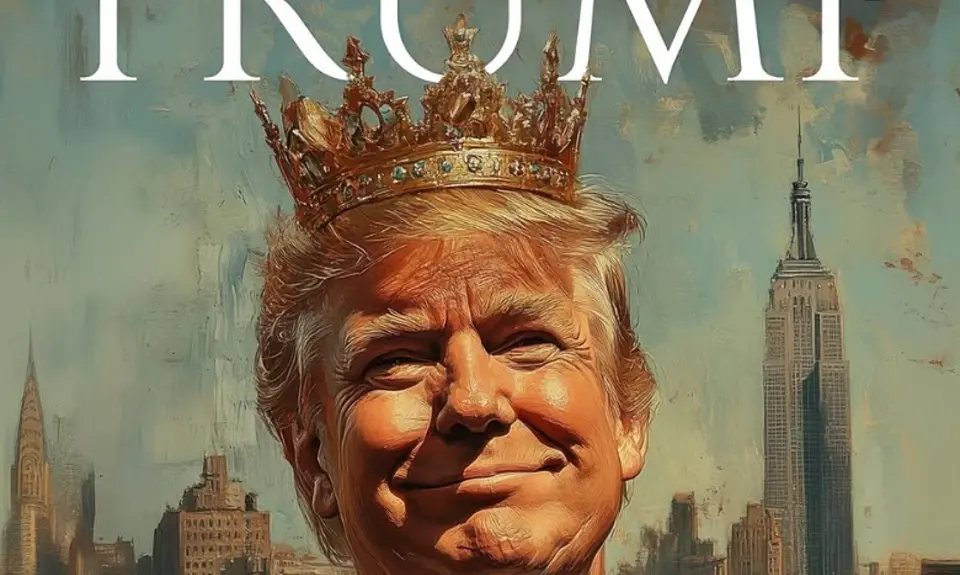
Confirmed Judges, Confirmed Fears” is a blog series documenting the harmful impact of President Trump’s judges on Americans’ rights and liberties. It includes judges nominated in both his first and second terms.
What’s at stake in this case?
In Trump v. Slaughter, Donald Trump claims complete power over agencies that Congress created to be independent and bipartisan, including the right to fire agency heads even when Congress has specifically protected them from being fired without cause.
What happened in this case?
Since the creation of the Interstate Commerce Commission in the 19th century, Congress and the president have recognized the need for some agencies to be insulated from political pressure. They have created numerous independent agencies whose leaders are nominated by the president subject to Senate confirmation, but then not removable by the president without cause. Examples include the Federal Trade Commission, the Federal Reserve Board, the National Labor Relations Board and the Consumer Product Safety Commission. The Supreme Court long ago upheld this type of structure as constitutional in a 1935 case called Humphrey’s Executor.
Last year, Trump purged several multi-member agencies of their Democratic members without cause, including FTC Commissioner Rebecca Kelly Slaughter. She sued, and a lower court held that Trump had clearly acted illegally, under Humphrey’s Executor. Trump appealed to the Supreme Court.
How did the Trump and other right-wing justices rule?
In a 6-3 decision written by Chief Justice Roberts and made possible by the three Trump justices, the Court’s MAGA majority overturned Humphrey’s Executor and gave Trump the power he claimed. Their decision dramatically destabilizes the balance of powers among the branches in furtherance of the once-fringe constitutional theory of the “unitary executive,” which grants immense and unchecked powers to the president. They held that all executive power belongs to one person – the president – and by definition that must include the ability to fire agency heads that are not carrying out his policies as he wishes.
What did the dissenting justices say?
Justice Sotomayor strongly dissented, joined by Justices Kagan and Jackson. She observed that by “transforming a duty to take care that the laws be faithfully executed into a license to act in defiance of those very laws,” the majority was giving the president “a power unknown even to the English Crown against which the Founders revolted.”
She noted the significant threats to our freedom as a result of the majority’s decision. In particular, Congress has relied on the principles laid out in Humphrey’s Executor, to serve as a check on the power of independent agencies created to serve the people. Because the powers of these agencies are so immense, Congress specifically included provisions protecting the leaders from being removed by the president without cause. This provided a buffer against abuses of power. But now, the Supreme Court majority has handed those powers directly to the president. Sotomayor wrote:
Seldom, if ever, has this Court worked such a profound bait and switch on a coequal branch: For more than 90 years, Congress believed, with this Court’s express approval, that it was allowed to create a workable Government, including by granting certain agencies tasked with certain responsibilities some independence from Presidential control. In rejecting that project, after decades of promising the political branches that structures like the FTC’s were permissible, the Court creates an Executive Branch that Congress never dreamed of establishing and that it now has little hope of ever reining in.
Sotomayor also pointed out that under the majority’s logic, civil service protections protecting federal employees from being fired for partisan reasons are now at risk.
Why is the result harmful?
The Court majority has engaged in a massive structural shift of power in our society. Donald Trump now has immense power over vast areas regulated by formerly independent agencies – power that Congress took pains to prevent a president from having. Trump now has the power to fire agency leaders who do not eagerly abuse their agency’s power to target Trump’s enemies or enrich him and his allies. The decision shows the importance of having fair-minded judges and justices on the bench.