“Confirmed Judges, Confirmed Fears” is a blog series documenting the harmful impact of President Trump’s judges on Americans’ rights and liberties. It includes judges nominated in both his first and second terms.
What’s at stake in this case?
In the years since the MAGA Supreme Court overturned Roe v. Wade, medication abortion care prescribed through telemedicine has become all the more important. In May 2026, Fifth Circuit Trump judges Kyle Duncan and Kurt Engelhardt provided the majority in a panel decision ordering a nationwide halt to the use of telemedicine for mifepristone, the most common abortion care medication. The May 2026 case is Louisiana v. Kennedy.
What happened in this case?
Even prior to the Dobbs decision, the FDA determined that patients could receive mifepristone by mail without in-person doctor visits. In 2023, it explicitly authorized pharmacies to send the medication directly to patients. This allowed women to access vital abortion care no matter what state they lived in, including states like Louisiana that had banned abortion.
In October 2025, Louisiana sued the FDA. It claimed that the 2023 decision was not adequately supported by evidence and therefore violated the Administrative Procedure Act. Even further, the state urged the court to stay the 2023 decision immediately, while litigation continues.
The FDA, now under the control of the Trump administration, did not defend its 2023 decision. Instead, it claimed that there had not been “adequate consideration” of all the evidence then. It asked the court not to rule until the agency could undertake its own review of the mifepristone regulations. Two manufacturers of mifepristone – Danco and GenBioPro – intervened to defend the FDA’s 2023 actions.
In April 2026, a district court declined to grant Louisiana’s petition in light of the FDA’s ongoing review. So Louisiana appealed to the Fifth Circuit.
How did the Trump judges rule?
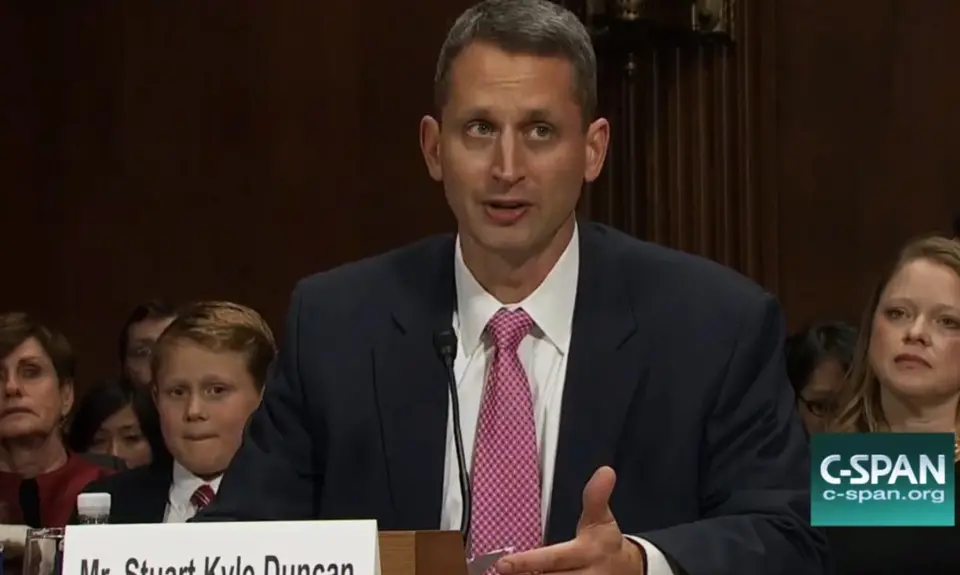
A three-judge panel of Duncan, Engelhardt, and Bush judge Leslie Southwick ruled for Louisiana in an opinion written by Duncan.
Duncan wrote that Louisiana was likely correct on the merits. As support, he noted that the Trump administration FDA “does not contest” the state’s criticism of the 2023 decision and, in fact essentially “acknowledged” its agreement with the state’s position by undertaking its review of the decision.
He also cited the Fifth Circuit’s previous and widely criticized ruling against the FDA in the Alliance For Hippocratic Medicine case. That’s the case in which the Supreme Court later held that the Fifth Circuit had been wrong to even consider banning the pill, because the anti-abortion doctors had lacked standing to sue.
Duncan also wrote that Louisiana was experiencing “irreparable harm” to its sovereign interests as long as women there could access mifepristone through telemedicine and mail delivery. Therefore, he concluded, the state had met its burden to show that the 2023 regulations should be stayed while its lawsuit continues through the courts.
What happens next?
The manufacturers of mifepristone immediately asked the Supreme Court to stay the Fifth Circuit’s decision. On May 4, the Court ordered a temporary pause in enforcement of the Fifth Circuit’s order, for a week, while the parties brief the issue to the Court. So mifepristone by telemedicine and mail remains available, at least for now.
Why is the result harmful?
With Roe v. Wade overturned, mifepristone is more important than ever in providing women access to safe abortion case. The ruling shows the importance of having fair-minded judges to protect our health and our freedom.