“Confirmed Judges, Confirmed Fears” is a blog series documenting the harmful impact of President Trump’s judges on Americans’ rights and liberties. It includes judges nominated in both his first and second terms.
What’s at stake in this case?
Texas Republicans challenged the constitutionality of the Pregnant Workers Fairness Act, which protects the rights of pregnant working people.
What happened in this case?
In 2022, Congress passed and President Biden signed a $1.7 trillion government funding bill. Among numerous other provisions, this omnibus bill included the Pregnant Workers Fairness Act (PWFA). The PWFA requires employers to make reasonable accommodations to known limitations related to the pregnancy, childbirth, or related medical conditions of employees, unless the company can demonstrate that this would impose an undue hardship. Under interpreting regulations, “related medical conditions” include abortion care.
In the House, the omnibus budget appropriations bill was passed under special procedures adopted during the COVID-19 pandemic to allow remote voting by proxy. Slightly more than half of the votes were cast that way.
Much of the funding went to the state of Texas, which accepted it. But the state of Texas, acting through then-attorney general Ken Paxton, sued the federal government over the PWFA. Texas claimed that under the Constitution, a quorum of the House requires the physical presence of at least half the members. Since more than half the members voted remotely, Paxton argued, the budget bill was passed unconstitutionally, and Texas is not bound to follow the PWFA.
At the district court level, Trump Judge James Wesley Hendrix ruled for Texas. On appeal, a three-judge panel of the Fifth Circuit reversed Hendrix and upheld the law’s constitutionality. But that decision was vacated pending an en banc decision by the circuit. That decision – Texas v. Blanche – came out in November.
How did the Trump judges rule?
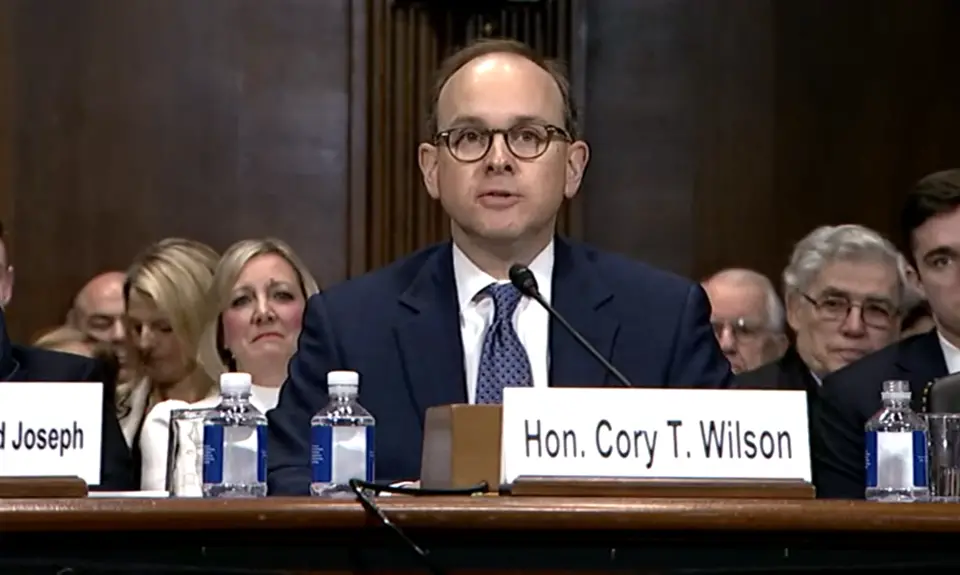
In a decision made possible by the court’s six Trump judges – Cory Wilson, Don Willett, James Ho, Kyle Duncan, Kurt Engelhardt, and Andrew Oldham – the court voted 9-8 to strike down the Pregnant Workers Fairness Act. They ruled that House members must be physically present for there to be a quorum under the Constitution.
Judge Wilson’s opinion claimed that it was “narrow” in scope because the court was not blocking enforcement of the entire omnibus budget appropriations act that he claimed was passed unconstitutionally. Instead, since Texas asked to be able to ignore only the PWFA while accepting the funding from the rest of the bill, the court was limiting its ruling to the PWFA.
What did the dissenters say?
The eight dissenters were nominated by both Republican and Democratic presidents, three by President George W. Bush, five by Presidents Clinton, Obama, and Biden. Obama judge James Earl Graves wrote a dissent that most of the others joined.
He pointed out that while the Constitution says the House must have a quorum, it is silent on whether members must be physically present or if they can be present in some other meaningful manner (such as by proxy). In addition, the Constitution explicitly gives the House the authority to establish its own rules. Therefore, nothing in the Constitution prohibits the House from using proxies to determine presence for the purpose of a quorum.
Graves also noted the illogic of the majority’s position that the entire budget bill was unconstitutional, but only the Pregnant Workers Fairness Act would be struck down:
There is no explanation offered to explain why, if the entirety of the statute was unconstitutionally passed, this court’s judgment should be limited only to one small sliver of the multitrillion dollar bill. Nor does the majority explain how Texas may seek to enjoin enforcement of the PWFA despite accepting millions of dollars under the very same Consolidated Appropriations Act of 2023.
Why is the result harmful?
The Pregnant Workers Fairness Act protects working people. It was passed to prevent employers from forcing employees into unpaid leave or even pressuring them out of their jobs completely because of their pregnancy and related conditions. But the decision made possible by the Trump judges removes this protection for working women in Texas, Mississippi, and Louisiana. It shows how we are harmed when we don’t have fair-minded judges protecting the rights and freedom of all people.