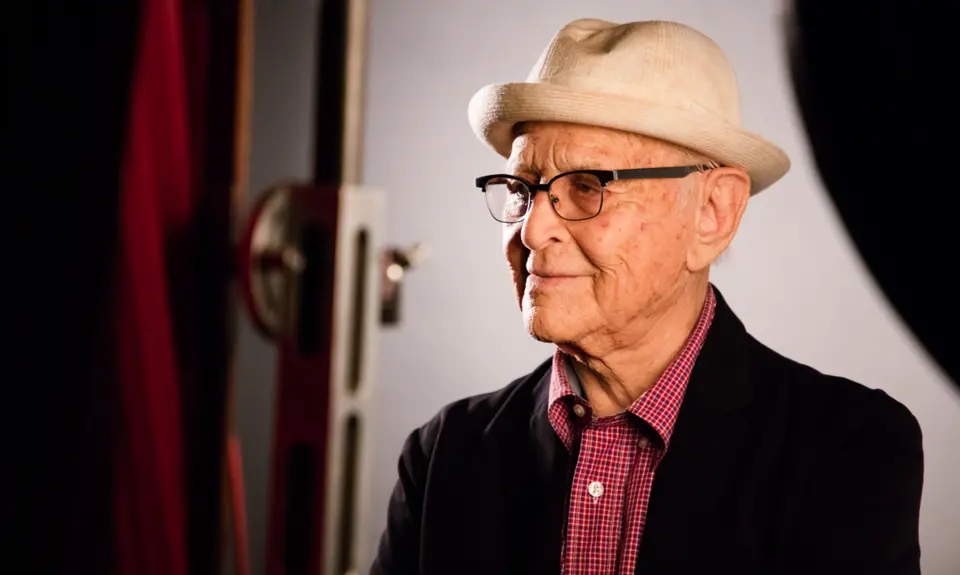
My father was Norman Lear, and on the second anniversary of his passing, his impact and example as an engaged citizen of this country still feels palpable. There was a tremendous outpouring of respect and sadness when he died at the age of 101, and it felt to be as much about how Norman Lear, the citizen and activist, lived his life as it was about his contributions as a producer, writer, and catalyst for cultural change. He had spent a lifetime in service to the values and ideals of our founding documents, and to many his absence continues to be deeply felt.
As a writer and producer, my father was unwavering in his conviction that airing our differences and finding common ground would foster empathy and promote healing. In his television shows, he famously placed his characters in the middle of discussions about race, gender, poverty, and social justice, hoping to bring us closer to one another by highlighting our connections as human beings. In All In The Family, when Archie’s conservatism came up against Mike’s progressive ideas, angry words flew back and forth but there was an underpinning of love that took away the sting for the audience. In 1982, he produced a television special called “I Love Liberty,” co-chaired by Lady Bird Johnson and Gerald Ford, that featured actors and politicians from all over the political spectrum. And as an activist and founder of People For The American Way, his strategy was always to expand the tent through provocative yet honest communication about difficult issues. He never stopped trying to smooth out our differences.
In his later years, my father mourned the loss of civics education in schools and was distressed by the creeping sense of apathy and helplessness he saw around him. Decades of involvement with the political process had taught him that our country was at its healthiest when there was an engaged citizenry. He understood this viscerally because his world was expanded and his soul enriched during a lifetime of forging relationships with people of varying beliefs (he had a long and respectful exchange of letters with Ronald Reagan). For him, being connected and committed were givens, regardless of where the political winds were blowing.
I am often approached by people who ask me what my father would do at this time of heated division in our country. The question is frequently accompanied by a look of anxiety and concern. I answer without hesitation that he would be on the phone every day: pitching ideas, raising money for the causes he believed in, and relentlessly thinking about how he could be of service. There is no question that the fire in his belly would be motivated by the current regression of democratic ideals and the twisting and reframing of our country’s promise of equality and opportunity. But he was, above all, a humanist whose bumper sticker for many years read, “Just another version of you.”
It is clear that the tone of today’s discourse is entirely different than it was during much of my father’s life, when debate and compromise were woven into the fabric of society. My father’s America is gone and there are those of us who grieve for the loss and others who can’t grieve for what they never knew. But, if my father were alive, I know he would continue to fight just as hard as he ever did, despite the cacophony of voices that have become angrier and more deafening in the two short years since he died. He believed so deeply in the inherent goodness and intuition of the American people.
It isn’t necessary to be Norman Lear to help our country find its way forward. His activism began by dipping his toe into one issue and then another, slowing building community, and pushing the needle forward one small measure at a time. Devoting oneself to active participation, whatever that may look like to each one of us, is part of my father’s legacy, and to me, it is a call to action for this present moment.