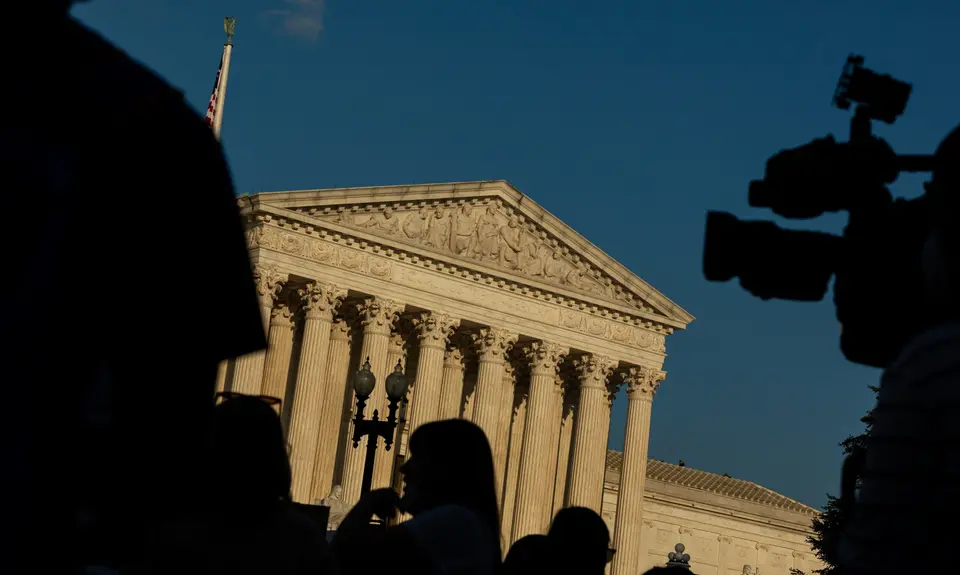
In a positive 7-2 decision in Bondi v. VanDerStok, the Court held that untraceable “ghost guns” can be regulated like other firearms under federal law. Justices Thomas and Alito dissented.
What are “ghost guns” and how have they made it harder to stop gun violence?
“Ghost guns” are an effort to get around common-sense safety measures adopted by Congress. They got that nickname because they don’t have serial numbers and are untraceable.
Through the Gun Control Act of 1968, Congress has established a number of measures to try to reduce firearm violence and increase the ability to track those who commit it. For instance, buyers are subject to background checks; sales to minors and convicted felons are prohibited; and guns must have serial numbers so their ownership can be tracked when used in crimes.
Ghost guns can be easily assembled from kits and quickly made into functioning guns. Based on the argument that they aren’t “firearms” under the law, they have been made without serial numbers to track them and sold to people who are prohibited from buying guns.
How does the statute define firearms?
The Gun Control Act defines “firearms” as “any weapon … which will or is designed to or may readily be converted to expel a projectile by the action of an explosive.” It also includes “the frame or receiver of any such weapon.” The statute doesn’t define “frame” or “receiver,” so that has been left to the Justice Department.
How did the Biden administration protect us from ghost guns?
In 2022, the Justice Department’s Bureau of Alcohol, Tobacco, Firearms and Explosives (ATF) adopted a regulation making it clear that ghost guns are “firearms” covered by the Gun Control Act. As such, they are subject to the same legal requirements as any other firearm.
The new regulation updated the definitions of “frame” and “receiver” to include items that can be readily converted into a frame or receiver. It also stated that a firearms assembly kit is a firearm under the Gun Control Act. Makers of ghost guns, customers, and opponents of gun safety measures sued to have the measure overturned.
How did the Supreme Court rule?
In a 7-2 opinion written by Justice Gorsuch, the Court held that ghost guns can be regulated as firearms. The majority noted that the statutory definitions include items that are not yet fully operable, but which can be readily made into weapons. Gorsuch left open the possibility that some specific starter kits might be too incomplete or cumbersome to count as weapons, but that could be addressed in litigation over those particular starter kits.
Justices Thomas and Alito dissented. Their position that ghost guns can never be regulated as firearms under current federal law would have created a gaping hole in gun safety laws.