“Confirmed Judges, Confirmed Fears” is a blog series documenting the harmful impact of President Trump’s judges on Americans’ rights and liberties. It includes judges nominated in both his first and second terms.
An en banc Fifth Circuit court overruled precedent and ruled that Americans do not have a right to sue when public libraries engage in political censorship. The 10-7 decision was made possible by the court’s six Trump judges, who all voted with the majority. The May 2025 case is Little v. Llano County.
What was this case about?
In the early 2020s, right-wing activists in Llano County, Texas, successfully agitated to have a number of books removed from the public library system. These included books for children and young adults addressing racism in America, sexuality, and gender. Leila Little and other Llano residents sued the county and several county officials for violating their First Amendment right to access information and ideas.
After a two-day evidentiary hearing, a federal judge granted the plaintiffs’ motion for a preliminary injunction. The judge noted that while libraries have broad discretion to curate their collections, they cannot remove books simply because they dislike the ideas conveyed in those books. This ruling followed the rule set forth in a 1995 Fifth Circuit case called Campbell v. St. Tammany Parish.
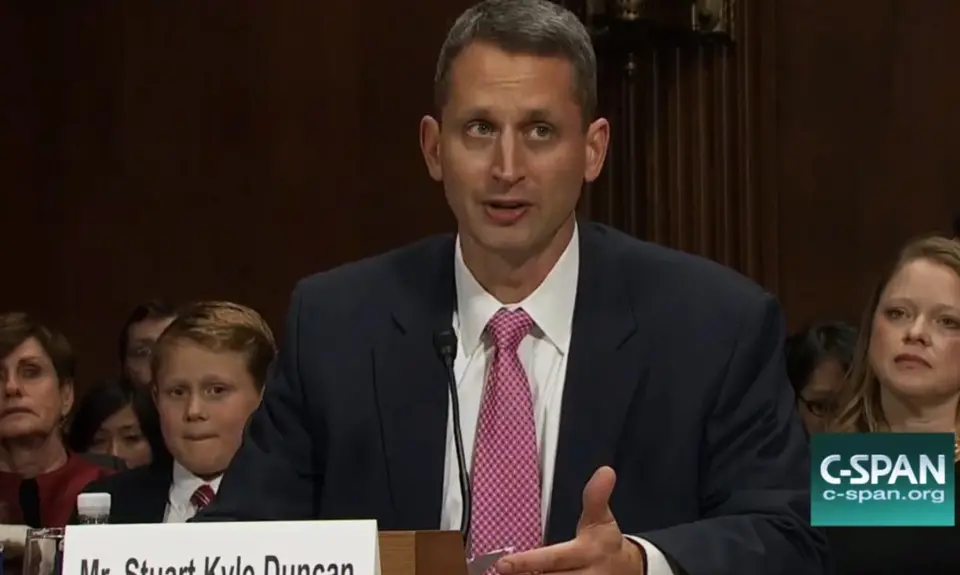
Llano officials appealed to the Fifth Circuit. In June 2024, a divided three-judge panel applied Campbell and affirmed the district court’s injunction relating to the books that the district judge found evidence were targeted for their racial and LGBTQ content. This came over a dissent from Trump judge Kyle Duncan. However, a month later, the full circuit voted to vacate the panel decision and ordered oral arguments so the entire court could consider the case.
What did the Fifth Circuit Trump judges do, and why was it harmful?
In May 2025, the court issued a 10-7 ruling in favor of the county and library officials. The court ruled that community members’ constitutional right to receive information is not violated when their public library removes books, even if the government’s goal is to censor political ideas. The opinion was written by Judge Duncan and joined by all five of the other Trump judges: Don Willett, James Ho, Kurt Engelhardt, Andrew Oldham, and Cory Wilson. Also joining were Reagan judges Edith Jones and Jerry Smith, and George W. Bush judges Catharina Haynes and Jennifer Elrod.
Duncan wrote that while the First Amendment protects one’s right to receive information from other people, it does not protect the right to “demand it from the government.” In addition, he wrote, if a resident has the right to receive information at a library, that gives the resident the ability to force libraries to carry specific books. He also claimed that it would be too difficult for courts to determine a fair standard for judging whether a book was removed for unconstitutional reasons: It would be “a nightmare” for courts to distinguish between permissible removing of books because they are vulgar, inaccurate, or educationally unsuitable – all of which are content-based decisions – and impermissible “viewpoint discrimination.” The majority overruled Campbell and took away residents’ right to challenge politically-motivated library removal decisions.
Obama Judge Stephen Higginson dissented (joined by judges nominated by three Democratic and two Republican presidents). He pointed out that Campbell has been precedent for 30 years “without prompting significant litigation,” showing that it established a workable standard to guide the public. But even if the task for courts were hard, that is common with First Amendment litigation. “We cannot shirk our responsibility simply because some members of the court hypothesize that First Amendment lines may be difficult to draw.”
The dissent also criticized the majority for “grossly misapprehend[ing]” the constitutional right at issue in this case: Residents have gone to court asserting a right against government censorship intended to deny them access to disfavored ideas. That is not at all the same as claiming a right to demand access to particular materials, which the majority opinion criticizes. The idea that the plaintiffs want to compel the library to add certain books to the shelves “is a red herring dragged throughout the majority opinion.”
The dissent described how the majority’s decision harms people throughout the Fifth Circuit:
Hereafter across Texas, Louisiana, and Mississippi, it simply does not matter legally if public officials, motivated by political hostility, target and remove books they deem inappropriate or offensive, in order to deny the public access to the information and ideas therein.
This ruling illustrates the importance of our federal courts to our freedom and the significance of having fair-minded judges on the federal bench.