This opinion essay was first published in The Chronicle of Philanthropy. It's posted here with full permission.
Earlier this year, while preparing to start a media training with a group of women elected leaders, I noticed one of the participants was missing — the mayor of a Minnesota suburb. A colleague explained that she had hastily flown to Washington, D.C., to try to salvage critical federal funds.
Resources she had counted on to build affordable housing were on the chopping block, so she left the conference immediately to make her case for the federal dollars. She returned the next morning, empty-handed but undeterred.
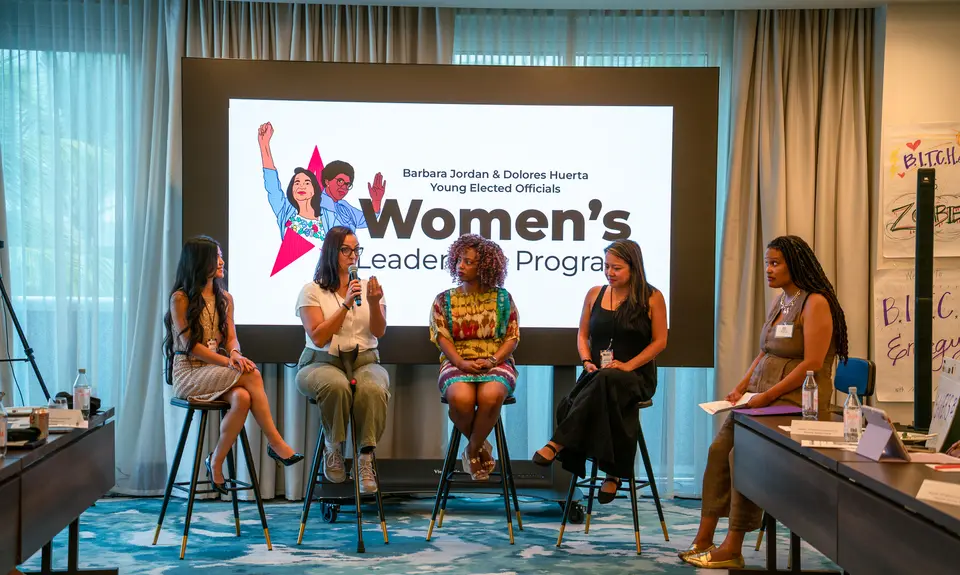
I had spent the weekend at a women’s leadership conference, coaching school board members, city councilors, mayors, and state representatives who make up the Young Elected Officials Network, a nonpartisan program of People for the American Way Foundation, where I work. For the past 20 years, the network has brought together rising public servants from across the country for skills-building, policy briefings, and peer learning.
The stories I heard gave me a glimpse of the high-stakes crises local and state officials are navigating because of federal actions — and how they do it with scant support.
One city council member from Washington, D.C., was coordinating a rapid response to the federal takeover of the local police. A school district member from California had to put together know-your-rights sessions and set up remote learning for students too afraid of ICE to attend school.
Across cities and states, local elected officials are on the front lines of democracy — trying to keep their constituents whole while absorbing the shockwaves of federal dysfunction. They are the ones who clean up after federal agencies and programs are slashed. They manage the fallout from misinformation and political violence and deal with a White House that many see as more interested in punishing communities than supporting them.
And yet they are often an afterthought in the still small but growing world of democracy funding. While philanthropic support for democracy work has grown significantly in recent years, it still represents just 0.7 percent of all philanthropic giving, according to research by the Democracy Fund. What’s more, support for local leaders barely registers as an issue for funders.
3 Simple Steps
Investing in the success of these local elected leaders, especially women of color and newer officeholders, needs to be at the center of any effort to protect communities during this fraught era. The help they need is straightforward and completely permissible for 501(c)(3) organizations, but too few grant makers are stepping up. Here are three concrete ways they can ensure local leaders are no longer an afterthought:
Fight isolation and burnout. Surveys conducted over decades of Young Elected Officials Network participants consistently identify peer support, shared policy resources, and national convenings as helpful in easing the feelings of loneliness and stress common among young, first-time elected leaders. Programs of this kind also increase retention in an otherwise high-burnout vocation and enhance well-being and professional performance, according to numerous academic studies.
Donors on the right have long recognized the value of such investments and seen significant gains as a result. The Leadership Institute, which as of 2023 had annual revenue of nearly $45 million, has trained more than 200,000 young conservatives. The $85 million dollar Turning Point USA and the smaller Patriot Academy and American Legislative Exchange Council all offer similar networks and trainings.
By contrast, leadership training and peer networks that support pro-democracy champions, receive a tiny fraction of those resources. For example, the Young Elected Officials Network and Local Progress Impact Lab, which supports local leaders focused on racial and economic justice, each have annual budgets of under $6 million.
Prioritize safety and security. Women elected leaders, who face greater harassment and hostile threats than men, are particularly at risk. And hostile attacks have risen across party lines since the November 2024 election, with women, young officials, and people of color more often the victims, according to Princeton University’s Bridging Divides Initiative.
Grant makers can help by funding digital safety training, legal counsel, crisis response, and mental health services. This is another place where peer networks give leaders a confidential space to share tips and learn how to develop a personal safety plan.
Help lower the barriers for first-time candidates. When Gracie Torres was running to serve on the board of the Western Municipal Water District in California — a position she has held since 2018 — she spent nearly $15,000 on childcare. Those expenses didn’t qualify for reimbursement due to state campaign finance rules at the time.
Today, 39 states and the District of Columbia authorize the use of campaign funds for childcare, which research shows has resulted in more women running for state legislatures. This is thanks to the efforts of organizations such as the Vote Mama Foundation and funders such as Pivotal Ventures, which invest in building women’s political participation.
Chaos Hits Home
When I asked the women leaders how their constituents viewed the chaos in Washington — whether anyone cared about authoritarianism, tariffs, or who was to blame for economic instability — one state representative answered without hesitation: “They’re pissed. And they’re focused on what’s right in front of them—schools, housing, the rising cost of groceries. They’re mad at everyone.”
Such responses are increasingly common and demonstrate how much more attuned local representatives are to their constituents’ needs. National politics may grab the headlines, but it’s local leaders who absorb the blows and deliver whatever solutions they can with the tools they have.
With the assassination of Minnesota State Representative Melissa Hortman and her husband on our minds, we closed the training by talking about fear and how to overcome it. I shared a quote from civil rights activist Audre Lorde that resonated in the room: “When I dare to be powerful — to use my strength in the service of my vision — then it becomes less and less important whether I am afraid.”
Let’s give these local leaders the support to be powerful. The health of our democracy depends on them. Our communities depend on them.