What’s Next From the MAGA Court? Preview of the 2026-2027 Term

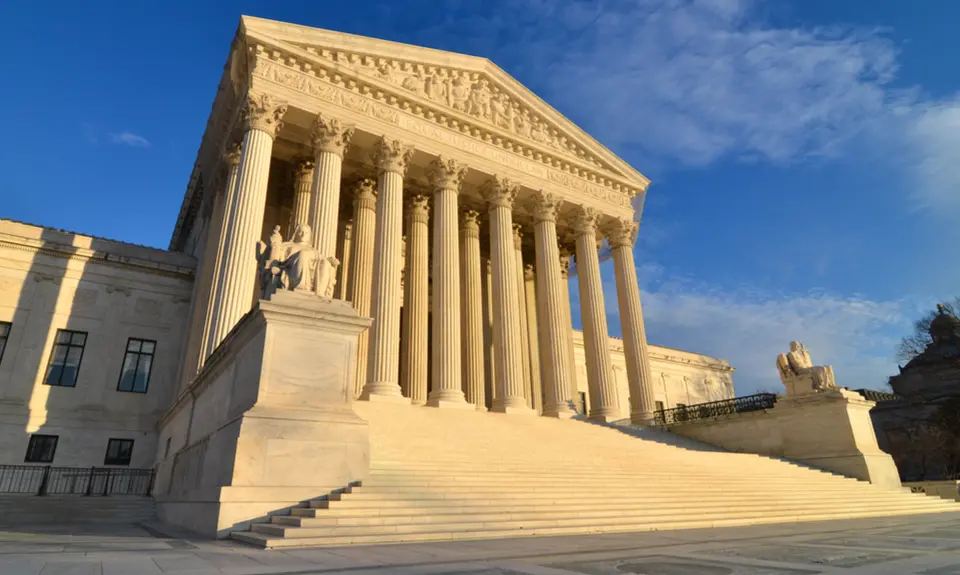
Supreme Court Building

This is a historic moment in the history of our nation. Since Sandra Day O’Connor’s replacement by Samuel Alito in 2006, our Supreme Court has been controlled by an extreme far-right majority. Due to Republican machinations in President Obama’s final year in office and during Donald Trump’s first term, the bloc of justices hostile to democracy, freedom, and civil rights and predisposed to corporate interests and Christian nationalism grew into a 6-3 majority.

In just the last five years, they have protected Donald Trump from the consequences of trying to steal the 2020 election that he lost, they have taken away our constitutional right to abortion care, and they have continued their campaign to eviscerate the Voting Rights Act.

The consequences? Donald Trump engages in unprecedented abuses of office, knowing he is protected from criminal prosecution for many of his misdeeds. Women are unable to access the abortion care they need, sometimes at the cost of their lives. And Republicans have engaged in a ruthless effort to target Black representation in Congress with the blessing of the Court’s MAGA majority.

But those are not the only consequences. Americans see what the current majority has done and recoil. Public approval for the Court continues to decline. And there is a growing recognition that to preserve our democracy, we must reform the Supreme Court.

Congress should make the justices adopt a binding code of ethics. Their terms on the Court should be limited. And when we have a pro-democracy president, Congress should expand the number of justices. Otherwise, no law that Congress passes to protect our rights and move past the Trump era will be safe from being struck down by the Court’s MAGA majority.

It is against this background that a new term begins this October. With cases on LGBTQ equality, voting rights, sex discrimination, holding federal officials accountable for constitutional violations, and gun violence already on the Court’s agenda, and more to be announced, the decisions this term will have a profound impact on people’s lives.

LGBT Equality


St. Mary Catholic Parish v. Roy

Oral arguments: November 3

This is yet another round in the far right’s long-term project of transforming religious liberty from a shield protecting religious exercise into a sword to harm others. This case challenges Colorado’s policy of preventing discrimination against LGBTQ families in state-funded universal preschool programs.

In 2021, Colorado established a funding program to expand access to preschool. No preschool is required to participate. But those that meet certain standards (such as those involving teacher qualifications and class size) and have a policy of nondiscrimination against students and their families are eligible for state funding.

St. Mary Catholic Parish operates preschools that discriminate against LGBTQ families. Nevertheless, it claims it is being targeted for its religious beliefs. It sued in federal court, claiming a constitutional right to receive state funding.

It lost in both district court and on appeal. A unanimous panel of the Tenth Circuit distinguished this case from recent Supreme Court precedent that when a state offers subsidies for private education, it cannot categorically exclude religious institutions. Unlike in those cases, Colorado actively solicited religious schools’ participation in the universal preschool program. In addition, the nondiscrimination requirement applies to all preschools, regardless of whether they are religious or secular. Therefore, the Tenth Circuit recognized that the nondiscrimination requirement is a valid and neutral law of general applicability and is not subject to a strict level of scrutiny.

The MAGA majority has already given anti-LGBTQ people a constitutional right to discriminate in certain contexts. Far-right forces are hoping the justices will help them again in their project to return to an era when LGBTQ people were excluded from mainstream society.


International Partners for Ethical Care v. Ferguson

Oral arguments: December 7

Parents in Washington (and organizations they belong to) are suing the state over its policy of providing gender-affirming care to transgender minors who run away from home. They claim this would violate their rights as parents in the event such care were provided to their children. 

However, the Court is not being asked to address the substance of the law. Instead, the legal issue at this point is whether the parents and organizations have standing to sue in the first place.

The Ninth Circuit held that they don’t have standing because they haven’t shown any actual or imminent injury. None of the parents have children who have run away to the type of shelter covered by the law. Instead, they express concern that this might happen in the future. In addition, they claim they are injured because the law affects how they parent. For instance, one set of parents said they are hesitant to discipline their child or confront them about their gender identity because they don’t want to give them reason to run away, where they might receive gender-affirming care.

Their appeal to the Supreme Court is limited to whether the parents, and therefore the organizations they belong to, have standing.

Gun Violence


Viramontes v. Cook County

Oral arguments: December 2

This case will determine if there is a Second Amendment right to have assault weapons such as AR-15 platform and similar semiautomatic rifles.

Viramontes challenges a law in Cook County, Illinois, prohibiting the possession of these weapons. It is consolidated with a case called Grant v. Rovella, which challenges a similar law in Connecticut that was passed in the wake of the Sandy Hook shooting.

In the past, there would be little doubt that the constitutionality of these laws would be upheld. But since the 2008 Heller decision, the MAGA justices have rewritten the Second Amendment, especially in 2022’s Bruen case. In that case, the majority directed lower court judges to stop balancing the individual’s right to own and carry firearms with the urgent need to prevent gun violence. Instead, judges can only uphold a firearms regulation if a comparable law existed at the time the Second or Fourteenth Amendments were adopted.

Even when the far-right majority began its rewriting of the Second Amendment in Heller, they stressed that it doesn’t protect all weapons. They cited the historical tradition of restricting “dangerous and unusual weapons” that existed when the amendment was adopted. They also focused on the right to self-defense.

Those challenging the assault weapon bans lost before unanimous panels of the Second and Ninth Circuits. In petitioning the Supreme Court, the plaintiffs claimed that the popularity and general availability of semi-automatic rifles like the AR-15 mean they cannot be considered the kinds of “dangerous and unusual” weapons that are unprotected by the Second Amendment.

The fact that the Supreme Court chose to consider their appeal indicates that several justices, and perhaps a majority, may agree with them.

Freedom to Vote


Republican National Committee v. Mi Familia Vota

Oral arguments: December 8

In this case, Republicans are defending two measures in Arizona designed to limit the freedom to vote: requiring proof of citizenship when registering to vote, and canceling the registrations of voters who the state claims are not U.S. citizens shortly before an election. The Court will decide if these violate the 1993 National Voter Registration Act (NVRA) or a 2022 federal consent decree.

Arizonans can register to vote in two ways. They can fill out a state form, which requires a document proving U.S. citizenship. Or they can fill out a federal form, which under federal law does not require such proof. In fact, in 2013, the Supreme Court struck down Arizona’s requirement that people using the federal form submit documentation of their U.S. citizenship.

So Arizona set up a burdensome two-tier system: Registrants using the state form had to present proof of citizenship and, once registered, could vote in any election. But registrants using the federal form could only vote for federal offices.

In 2018, to settle a lawsuit by LULAC, the state entered into a court-approved consent agreement. It agreed that registrants using the state form but not having proof of citizenship would no longer be completely denied. Instead, they would be treated as equivalent to federal-form users (who don’t need proof of citizenship) and registered as federal-only voters.

In 2022, Arizona Republicans passed a law so that state-form registrants without proof of citizenship would once again be prohibited from voting in any election. Mi Familia Vota contends that the state does not have the right to unilaterally abrogate the federal court-approved consent decree. The organization also argues that the new law violates an NVRA provision requiring that federal and state registration forms be “equivalent,” because the two forms once again have very different consequences for those who don’t have documentary proof of citizenship.

The state also passed a law requiring officials to engage in monthly purges of the voter rolls to remove people they conclude are not U.S. citizens. These purges can occur at any time, even though the NVRA prohibits purges within 90 days of an election.

It is important to put these laws into context. The two laws at issue before the Supreme Court were passed with others that were struck down by the lower courts and which are not being appealed. Those laws prohibited people who registered via the federal form from being able to vote by mail like any other registered voter. About 90% of Arizona voters cast their ballots by mail. They also prohibited federal-form registrants from being able to vote for president. Instead, they could only vote in federal House and Senate elections.

These restrictions are without legitimate basis. Studies repeatedly demonstrate that illegal voting by noncitizens is “vanishingly rare.” In fact, after Trump lost Arizona in the 2020 election, even an audit of the results supported by his supporters failed to show evidence of voter fraud.

Sex Discrimination


Crowther v. Board of Regents of the University of Georgia

Oral arguments: November 30

This case involves an effort to prevent school employees from being able to sue for sex discrimination under Title IX.

Title IX prohibits schools receiving federal funds from discriminating on the basis of sex. This is an exercise of Congress’s authority under the Constitution’s Spending Clause. Congress can set conditions under which its money can be spent, and the recipients agree to those conditions when they accept the funds.

Thomas Crowther was an art professor at Augusta University, and MaChelle Joseph was the head women’s basketball coach at the Georgia Institute of Technology. Each was let go, and each claimed it was because of sex discrimination. So each sued the University System of Georgia for violating Title IX.

Georgia acknowledges that Title IX prohibits sex discrimination in employment at federally funded schools. But the state claims that Title IX does not let victims sue. They argue that this is because Congress imposed the anti-discrimination requirement as a condition of receiving federal money, not as a general prohibition applying to everyone. And since Title IX doesn’t explicitly give victims of job discrimination a right to sue, such a right does not exist. 

A panel of the Eleventh Circuit Court of Appeals ruled in the state’s favor. The full court voted 7-5 not to review that decision en banc. That result was made possible with the support of all six Trump judges on the court. All five Obama and Biden judges dissented.

Earlier this decade, the current 6-3 far-right majority ruled that Congress did not allow private lawsuits for certain violations of the Rehabilitation Act and the Affordable Care Act, which prohibit recipients of federal funds from discriminating on the basis of disability. If they rule similarly in this case, it will make it harder to eliminate sex discrimination in educational employment.

The National Women’s Law Center filed an amicus brief citing the pervasiveness and impact of sex discrimination in educational institutions. As they state in conclusion, Title IX’s promise can only be meaningful for women who work in education if they can enforce their right to be free from sex discrimination, including in court.

Holding Federal Officials Accountable for Violating Constitutional Rights


Nielsen v. Watanabe

Oral arguments: November 9

This case involves efforts to make it harder for victims to sue federal officials who violate their constitutional rights.

The Supreme Court is being asked to shut down a lawsuit by Kekai Watanabe, an incarcerated individual, against prison officials who denied him needed medical care after he was brutally assaulted by other prisoners. His coccyx had been fractured, and bone chips entered his soft tissue. But prison officials didn’t send him to a hospital, let him be examined by a specialist, or provide him any medication other than over-the-counter pain medication.

For many years, conservative justices have shown immense hostility to a groundbreaking 1971 precedent called Bivens. In that case, federal agents had unconstitutionally searched Webster Bivens’ home without a warrant, and he sued. The Supreme Court held that he had a right to sue them, even though no federal statute specifically gives people the right to sue federal officers who violate their constitutional rights. (In contrast, there is a law that permits such lawsuits against state and local officials who violate someone’s constitutional rights.)

Over the next ten years, the Court applied Bivens in two other circumstances. One of them was Carlson v. Green, where a prisoner’s estate was allowed to sue federal prison officials under the Eighth Amendment for failing to treat the prisoner’s asthma, a legal claim very similar to the one in the current Supreme Court case.

But in recent decades, the Court majority has become hostile to Bivens and to the understanding that courts are essential to making our most important rights enforceable, rather than just empty promises. Without formally overturning Bivens, they have repeatedly directed lower courts not to “extend” it to cases with different fact situations than the ones applying it in cases like Carlson.

In this case, the Ninth Circuit held that Watanabe’s claim was like the one in Carlson. But the defendants argue that any difference between the two cases makes this one an “extension” of Bivens that warrants dismissal. For instance, they cite the fact that this case involves an injury that wasn’t fatal.

At a time when parts of the federal government have been weaponized to terrorize communities around the country, the Supreme Court’s hostility to judicial remedies for unconstitutional action threatens us all.

Protecting the Environment


Suncor Energy v. Commissioners of Boulder County

Oral arguments: October 5

State and local governments are expending significant amounts of money to mitigate the consequences of global climate change, including floods, droughts, and wildfires. The Supreme Court will decide if they can sue fossil fuel companies and collect damages for contributing to these problems.

Boulder County, Colorado, claims that Exxon and Suncor knowingly caused the current crisis. Boulder sued the companies in state court, claiming that they knowingly contributed to global climate change and concealed or misrepresented the dangers their products were causing. Boulder’s claims are based on state laws on civil conspiracy, unjust enrichment, nuisance, and trespass.

The companies claimed that even if the accusations were true, such state law claims are preempted by federal laws passed by Congress that regulate emissions. They also claim that  they would unconstitutionally impair the federal government’s ability to effectively engage in foreign policy in areas relating to emissions and climate change. The state trial court rejected the companies’ arguments, as did the Colorado Supreme Court, ruling that the trial can be held and the county can try to make its case.

But the companies have appealed to the Supreme Court, which will decide whether claims such as Boulder’s can be litigated.

Other Cases the Court May Hear

The justices have so far announced fewer than half of the cases they are expected to hear this term. Among the other significant issues they may address this term are:

Detaining longtime resident immigrants indefinitely: The Trump administration claims the power to detain millions of noncitizens without bond, including ones who have been here for decades. The vast majority of courts have rejected this extreme reinterpretation of longtime immigration law as contrary to congressional statute. But with Trump judges in the Fifth and Eighth Circuits putting those courts in disagreement with others to address this issue, the Supreme Court is likely to decide whether to uphold this abuse of power and attack on immigrant communities.

Imposing the Ten Commandments on public schoolkids: Both Texas and Louisiana have passed laws requiring schools to prominently place the Ten Commandments in every classroom in every public school in the state. The Fifth Circuit upheld the Texas law in a decision made possible by the votes of the court’s Trump judges. That case was Nathan v. Alamo Heights Independent School District.

Blocking efforts to prevent gun violence: In Novotny v. Moore, the Fourth Circuit upheld a Maryland law banning guns from a number of sensitive places, such as school grounds, public transportation, government buildings, state parks, casinos, healthcare facilities, and within 1,000 feet of a public demonstration. The case has been appealed to the Supreme Court, which is considering whether to hear it.

Illegally appointing U.S. Attorneys: Trump has repeatedly sought to install acting or interim U.S. Attorneys without Senate confirmation in violation of federal law. Various courts have struck down these machinations. United States v. Jackson is the administration’s appeal of their loss in the Ninth Circuit, which ruled that Sigal Chattah was unlawfully designated acting USA for the District of Nevada.

Efforts to sabotage the midterm elections: Fortunately, the Court put a stop to Trump’s scheme to prevent millions of Americans from being able to vote by mail this fall. But he and his allies are not through trying to prevent the midterms from being free and fair. The justices may be called upon to address one or more such efforts, including if losing parties try to prevent the winners from having their victories recognized.

Conclusion

The Court majority that Donald Trump and Senate Republicans made possible during his first time continues to do great damage. The 2026-2027 term is likely to continue that trend.

But ultimately, political power belongs to the American people. 

We elect the people who nominate and confirm every Supreme Court justice and lower court judge. We elect the Congress that can pass structural reform of the Supreme Court.

And as the American people look at the current Supreme Court, we know that change is needed.