
Collaborators on the Court: The MAGA Majority Helps Trump Attack Our Freedom in the 2024-25 Term

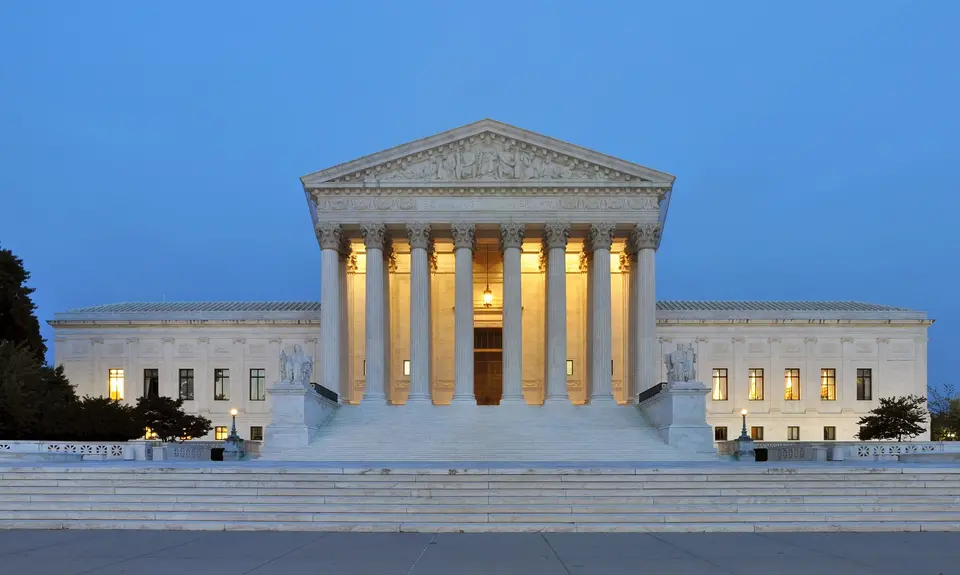
the Supreme Court

Since the beginning of Donald Trump’s second term, our nation’s circuit and district courts have been the only branch of the federal government providing the needed checks and balances to combat his unprecedented assaults on our freedom. For the most part, with the exception of a number of judges nominated by Trump in his first term, the lower federal courts have been performing admirably, as judges face increasing threats of violence and government retaliation for doing their jobs. 

Ominously, however, the Supreme Court has proved to be a dangerous exception. Last term, they decreed that Trump is immune from criminal prosecution for illegal conduct he commits while in office. This term, they weakened the ability of lower courts to meaningfully check even the most indisputably unconstitutional abuses of presidential power. They also continued their own ongoing assault on our civil rights. 

As described in more detail below, the MAGA justices: 

In addition to these regularly argued cases, the Court also issued a number of shadow docket orders that facilitated Trump’s ongoing abuses of power.

Weakening Courts’ Ability to Check Trump 

With the three Trump justices making a 6-3 majority possible, the Supreme Court severely weakened federal courts’ ability to check a tyrannical president’s blatantly unconstitutional abuses of power. Less than two weeks after millions of Americans rose up to say “No Kings,” six justices essentially responded, “Yes Kings.” The case is Trump v. CASA. 

What was this case about? 

Trump v. CASA was one of three consolidated cases stemming from Trump’s lawless effort to eliminate the Fourteenth Amendment’s protection of birthright citizenship. The case was technically not about that. Instead, it was about whether and when federal district courts can issue preliminary orders blocking the government from carrying out an illegal action, not just against the plaintiffs in the case, but against any individual anywhere in the country. This is an immensely important issue at a time when the judiciary is the only branch of the federal government enforcing checks and balances on a tyrannical Trump regime. 

When an unlawful federal government action hurts people across the country, it is important to be able to take timely action to stop that action nationwide. This case was just one example of why it matters. Several individuals and Democratic-led states went to court to challenge Trump’s order that would strip citizenship from Americans born in the United States to parents who were not documented. Lower courts issued nationwide injunctions barring its enforcement, since it is blatantly unconstitutional.  

The Trump administration appealed. It didn’t defend the legality of its actions under the Fourteenth Amendment. Instead, it asked the Supreme Court to limit the scope of the district courts’ injunctions, to protect only people who are parties to the litigation or who live in the states that are parties to the litigation. 

While the context of this case was birthright citizenship, the use of nationwide injunctions is relevant to any legal right that comes under attack from an abusive government. 

How did the Trump justices rule? 

In a 6-3 opinion written by Justice Amy Coney Barrett, the Supreme Court’s MAGA majority made it much harder for the rest of the judicial system to continue to play its vital role in checking tyrannical power. All of the far-right justices joined her opinion in full. 

Justice Barrett wrote that when Congress created the system of lower federal courts in 1789, it did not grant courts the power to issue nationwide injunctions. While courts can fashion a remedy that gives “complete relief” to the parties, she wrote, a nationwide injunction generally goes much farther than that because it affects the rights of parties not before the court. 

The majority noted that any party asking for a stay of a lower court injunction has to prove that it will likely suffer “irreparable harm” without relief. But they concluded that the Trump administration has met that burden. They claimed that a nationwide injunction by definition causes “irreparable harm” to the executive branch. The harm is that courts are “improperly intruding” on the executive’s right to enforce its policies against people who are not parties to the case. 

How did the dissenting justices respond? 

The three dissenting justices pointed out that the executive branch has no legitimate interest in enforcing obviously unconstitutional policies, so it can’t be considered irreparably injured. Barrett dismissed that concern as “premature” because the legality of the Trump policy wasn’t being argued in this case. 

The dissenters also made clear the terrible impact of this decision. Justice Sonia Sotomayor (joined by Justices Elena Kagan and Ketanji Brown Jackson) did not mince words: 

No right is safe in the new legal regime the Court creates. … [The majority’s] holding renders constitutional guarantees meaningful in name only for any individuals who are not parties to a lawsuit. Because I will not be complicit in so grave an at­tack on our system of law, I dissent. 

In her own dissenting opinion, Justice Jackson called the majority decision “an existential threat to the rule of law.” She wrote: 

[The majority endorses] a zone of lawlessness within which the Executive has the prerogative to take or leave the law as it wishes, and where individuals who would otherwise be entitled to the law’s protection become subject to the Executive’s whims instead. 

The case illustrates the importance of our federal courts to our freedom and the significance of having fair-minded judges on the federal bench. 

Back to top

Laws Targeting Trans People 

In U.S. v. Skrmetti, the Court upheld a state law making it illegal to give transgender minors critically important gender-affirming care. Chief Justice John Roberts wrote the majority opinion for a 6-3 Court. The ruling against trans people was made possible by the three Trump justices. Justices Sotomayor, Kagan, and Jackson dissented. 

What was this case about? 

A 2023 Tennessee law prohibits the use of puberty blockers and hormone therapy for minors if the purpose is to treat gender dysphoria. Those therapies are still available to minors in Tennessee to address other health issues unrelated to gender dysphoria. Health care providers who violate the law can be subject to professional discipline. They can also be sued by minors or their parents. The bill has been supported by forces that have for many decades fought hard to keep LGBTQ+ people marginalized as outsiders from our society and unprotected from discrimination. 

The state was sued by three trans teenagers who have relied on the now-banned therapies, their parents, and a doctor who treats gender dysphoria. Because the law violates people’s civil rights, the Biden administration joined the lawsuit and argued that the ban violated the Equal Protection Clause. They all lost in the Sixth Circuit and appealed, but the Court only agreed to hear the Biden administration’s Equal Protection appeal. (After oral arguments, the Trump administration changed the federal government’s position.) 

How did the majority rule and how is it harmful? 

The majority opinion held that the state ban doesn’t discriminate against trans people or make distinctions based on sex. Instead, “on its face,” the law only classifies based on age (making some medical treatments unavailable to minors) and based on what conditions the medical treatments can be used for. And neither of those classifications requires a heightened level of scrutiny from the courts. 

For instance, Roberts acknowledged that hormone blockers would be available to a cisgender boy (to delay early puberty) but not to a transgender boy (to prevent “gender incongruence”). But, according to the majority, that isn’t discrimination, because the treatments are for two different medical conditions. 

Since the majority claimed that the law doesn’t discriminate on the basis of being trans, they did not address the question of whether a law targeting trans people triggers heightened scrutiny under the Equal Protection Clause. 

However, in concurring opinions, Justice Samuel Alito and Justice Barrett (joined by Justice Clarence Thomas) chose to address this issue. They concluded that transgender status is not a suspect classification triggering a higher level of judicial scrutiny. 

In her dissent, Justice Sotomayor (joined by Kagan and Jackson) sharply criticized the majority. She pointed out that Tennessee’s law expressly classifies on the basis of sex and transgender status, but “the majority refuses to call a spade a spade.” 

The dissenters wrote that laws targeting trans people should trigger heightened scrutiny from the courts. Sotomayor and Jackson concluded that the state law should be struck down under this heightened scrutiny, while Justice Kagan would have let the lower court make that determination initially. But they all agreed on the impact of the majority’s decision: 

[The majority opinion] does irrevocable damage to the Equal Protection Clause and invites legislatures to engage in discrimination by hiding blatant sex classifications in plain sight. It also authorizes, without second thought, untold harm to transgender children and the parents and families who love them. 

Indeed, trans people are increasingly being targeted for discrimination by the Trump administration and far-right state governments. The Supreme Court’s harmful ruling illustrates the significance of having fair-minded judges on the federal bench to protect our health, our families, and our rights. 

Back to top

Civil rights 

In Lackey v. Stinnie, the majority made it harder for people whose civil rights have been violated to afford to go to court to vindicate their rights. The Court did this by making it easier for civil rights violators to avoid having to pay their victims’ attorneys’ fees. 

What was this case about? 

In 1976, Congress passed a law stating that the “prevailing party” in certain civil rights actions can recover reasonable attorney’s fees from the other side. This is an essential part of protecting civil rights. Those who are most likely to suffer from civil rights violations are often those least able to afford a lawyer. The law gave lawyers an incentive to represent parties without a lot of money. 

This case concerned the issue of who counts as a “prevailing party.” If the plaintiff successfully gets a preliminary injunction and the case never gets to trial, is that enough to be a “prevailing party?” Or does the case have to proceed all the way to a trial and a final ruling? 

In this case, Virginia drivers were having their licenses automatically suspended if they didn’t pay certain court fines and fees. They sued and got a preliminary injunction from a judge who found that this likely violated their constitutional rights. But the case didn’t go to trial. Instead, the state reformed the law, and the case was dismissed as moot. Since the case never reached the final stage, Virginia claimed it did not have to pay the plaintiffs’ attorneys’ fees. 

How did the Court majority rule? 

In a 7-2 opinion written by Chief Justice Roberts, the majority ruled against civil rights plaintiffs. He wrote that in order to be a “prevailing party,” your case has to be conclusively decided by a court. Getting a preliminary injunction isn’t enough, even if the case never proceeds any further than that. 

How does this decision hurt people? 

In her dissent, Justice Jackson (joined by Justice Sotomayor) explained that the majority’s decision was at odds with congressional intent. Congress wanted to encourage attorneys to file civil rights actions on behalf of the most vulnerable people in our society. But the majority’s decision makes private civil rights enforcement harder, not easier. 

She also pointed out the majority makes it possible for defendants to game the system. If the case against them is so strong that a court issues a preliminary injunction, they can strategically moot the case and avoid paying the plaintiffs’ attorneys’ fees. That leaves victims of civil rights violations “holding the bag for considerable litigation fees despite – and largely because of – their having succeeded in obtaining preliminary relief.” 

Because of the majority’s ruling, it will now be harder for those who have had their civil rights violated to find lawyers willing to represent them even when their case is strong. This puts all of us at risk. 

Back to top

LGBTQ-Inclusive School Curriculum 

All 3 Trump justices (Neil Gorsuch, Brett Kavanaugh and Barrett) cast deciding votes in the Court’s 6-3 opinion that required a local school board to allow parents to “opt out” their students from classes that use LGBTQ+-friendly books that conflict with the parents’ religious beliefs. Concerned about the effect of the ruling on public education and on the Court’s freedom of religion jurisprudence, Justices Sotomayor, Kagan, and Jackson strongly dissented from the June 2025 decision in Mahmoud v. Taylor. 

What happened in this case? 

During the 2022-23 school year, the Montgomery County (Maryland) public school system (MCPS) introduced several LGBTQ+-friendly storybooks and other materials into the school curriculum. MCPS initially permitted parents to “opt out” their children from participating in classrooms using these materials, but this soon proved impractical and disruptive, so the opt-out policy was ended.  

Rather than following MCPS procedure for objecting to and challenging books, under which they could have presented concerns and sought administrative relief all the way up to the superintendent and school board, a number of parents filed a federal lawsuit, claiming that the use of the books in their children’s classrooms without allowing an opt-out violated their right to free exercise of religion. A district court ruled in favor of MCPS, and the Fourth Circuit affirmed. The Supreme Court agreed to review the case. 

What did the three Trump justices and the rest of the Court majority do and why is it harmful? 

Justice Alito wrote a 6-3 opinion, joined by all three Trump justices plus Chief Justice Roberts and Justice Thomas, which reversed the decision below. The majority ruled that a preliminary injunction should be entered while the lawsuit continues that grants opt-out rights to parents who object to the use of LGBTQ+-friendly books because of religious objections. According to Alito, the use of the books poses a “very real threat of undermining the religious beliefs and practices” that the objecting parents “wish to instill.”  

Justice Sotomayor strongly dissented, joined by Justices Kagan and Jackson. As a matter of law, she explained, the majority’s ruling and its “very real threat” test are “squarely foreclosed” by Court precedent. “Mere exposure” to “objectionable ideas” as in this case, she went on, “does not give rise to a free exercise claim,” according to past precedent. The assertion that including the challenged books among those being read by students imposes a “very real threat” of undermining parents’ religious beliefs, she went on, is nothing more than “renaming” the “exposure” theory that the Court has rejected as a basis for a free exercise claim in public schools and elsewhere. 

The Court’s new “very real threat” test, Sotomayor went on, includes “no meaningful limits” on the types of school decisions now subject to strict scrutiny. The ruling thus threatens to “wreak havoc on our Nation’s public schools” as challengers maintain that countless public school practices and policies violate religious freedom. As education law expert Justin Driver put it, the decision may well “open a Pandora’s box in countless classrooms” as objectors “in effect veto individual school lessons and assignments.” It also casts “profound doubt,” he continued, on the principle of LGBTQ+ equality. 

The litigation will continue, but the preliminary injunction mandated by the Court majority will likely cause significant damage to our rights and our public schools. In addition, the case illustrates the importance of our federal courts to health, welfare and justice and the significance of having fair-minded judges on the federal bench. 

Back to top

Attacks on Planned Parenthood 

Trump Justice Gorsuch wrote a 6-3 Supreme Court opinion, joined by Trump justices Kavanaugh and Barrett plus Chief Justice Roberts and Justices Alito and Thomas, which effectively held that South Carolina could prohibit any Medicaid funding from going to Planned Parenthood. The majority ruled specifically that patients could not sue to vindicate their right to choose a provider under Medicaid. Justices Sotomayor, Kagan and Jackson strongly dissented in the June 2025 ruling in Medina v. Planned Parenthood. 

What happened in this case? 

Even before the Supreme Court overturned Roe v. Wade, a number of conservative states took action to defund groups like Planned Parenthood (PP) that provide abortion care, among their other work. In 2018, South Carolina’s governor announced that no PP clinic in the state could receive any Medicaid funding, even for non-abortion health care. PP sued, as did Julie Edwards, a patient who was very satisfied with the non-abortion-related medical care she was receiving from a PP clinic. She sued under the general federal civil rights statute, 42 U.S.C. 1983, contending that the state was violating her right under the Medicaid law to choose her own health care provider. 

A district court ruled in Edwards’ favor on summary judgment, and the Fourth Circuit affirmed, in an opinion by conservative Judge J. Harvie Wilkinson. The Supreme Court directed that the case be reconsidered in light of a recent decision, and Judge Wilkinson again ruled in favor of Edwards, enjoining the state from terminating PP from the Medicaid program. The Court determined to review the case on the merits. 

What did Gorsuch and the rest of the Court do and why is it harmful? 

Justice Gorsuch wrote a 6-3 decision, joined by the other Trump justices as well as Roberts, Thomas, and Alito, which reversed the Fourth Circuit. Gorsuch ruled that an individual like Edwards cannot sue under 42 U.S.C. 1983 to enforce her right to choose a health care provider under the Medicaid law. He noted that laws enacted under Congress’ spending power, like Medicaid, are “especially unlikely” to confer such enforceable rights. As a result, South Carolina’s decision to expel PP from Medicaid in the state can’t be challenged in court by the people who are harmed, even if the state’s action violates the federal Medicaid statute.  

Justice Jackson wrote a strong dissent, joined by Justice Sotomayor and Kagan. She carefully reviewed the history and past precedent concerning 42 U.S.C. 1983 and whether federal laws like Medicaid create an enforceable right to sue under that civil rights law. Precedent makes clear, she explained, that the test is whether the statute “unambiguously confer[s] federal rights,” and that under that test, the Medicaid law’s choice-of-provider provision “readily creates an enforceable right.” She specifically noted that in a prior case, the Court had squarely rejected” the argument that it now appeared to embrace that there was an “implicit carveout” for laws like Medicaid enacted by Congress under its spending power. She showed how the majority’s holding “undermines” 1983’s “core function”, “warps” past precedent, and “thwarts Congress’ will” in enacting the Medicaid law.  

The result, the dissent concluded, is that the majority decision “will strip” South Carolina and “countless other Medicaid recipients around the country” of the “deeply personal freedom” to “decide who treats us at our most vulnerable,” and will further weaken “one of the country’s great civil right laws.” In addition, the case illustrates the importance of our federal courts to health, welfare and justice and the significance of having fair-minded judges on the federal bench. 

Back to top

Limiting Disability Rights 

In Stanley v. Sanford, a 7-2 majority made possible by the three Trump justices narrowed the protections of the Americans with Disabilities Act (ADA). Specifically, the Court limited the ability of people with disabilities to sue their former employers for discrimination in providing post-employment benefits. Justices Sotomayor and Jackson dissented. 

What was this case about? 

Karyn Stanley was a firefighter in the city of Sanford, Florida. When she was hired, the city included several fringe benefits in addition to her salary. They included a subsidy for retirees to cover their health insurance up to age 65. This benefit was available to people who retired after 25 years of service, or who retired early due to disability. 

But a few years after Stanley was hired, the city changed its policy. Retirees with 25 years of service remained eligible for the health insurance benefit until they were 65. But people who retired due to disability remained eligible only until they received Medicare benefits or two years after retirement, whichever comes first. 

Stanley developed Parkinson’s disease and had to retire early on disability at the age of 47. She lost the health insurance subsidy after just two years, rather than having it continue until age 65. 

What was the issue before the Court? 

Stanley sued the city for violating her rights under the ADA. The lower court ruled that she did not fit the ADA’s definition of a “qualified individual” covered by the law. 

Under Title I of the ADA, employers may not discriminate against “a qualified individual” on the basis of their disability. The ADA defines a qualified individual as someone who “can perform the essential functions of the employment position that such individual holds or desires.” This case involves a former employee with a disability who alleges that limits on her retirement benefits violate the ADA. The question for the Court was whether a former employee is a “qualified individual” under the ADA, since she no longer holds or even wants a job with the employer. This question had divided lower courts. 

How did the majority rule, and how does it hurt people? 

In a 7-2 decision written by Justice Gorsuch and which the other two Trump justices joined, the Court ruled against the former employee in this case. The majority made a textual argument. Gorsuch noted that the ADA defines “qualified individual” with present-tense verbs: a person who “can perform” a job that she “holds or desires.” According to the majority, this means the law only protects people who can do the job they hold or seek at the time they experience discrimination. If the discrimination occurs at a time when you are retired, as happened here, the ADA does not protect you. This interpretation of the law clearly harms retired people with disabilities. 

The majority rejected the argument that their interpretation clashed with Congress’s intent to eradicate discrimination against people with disabilities. Justice Gorsuch wrote that “what Congress (possibly) expected matters much less than what it (certainly) enacted,” as discovered through his textualist approach to the law. 

What did the dissent say? 

Justice Jackson dissented, joined by Justice Sotomayor. She criticized the majority for “viewing this case through the distorted lens of pure textualism” and therefore denying retired people protections that Congress established in the ADA. She pointed out that Congress included the definition of a “qualified individual” simply to reaffirm that employers were not being required to fill jobs with people who could not actually do those jobs even with reasonable accommodations. 

Jackson also pointed out that Stanley was still employed at the time the city adopted its discriminatory retirement policy. That made her a “qualified individual” under the ADA. 

Jackson also made a direct attack on textualism. In a passage that Sotomayor did not join, Jackson wrote: 

Our interpretative task is not to seek our own desired results (whatever they may be). And, indeed, it is precisely because of this solemn duty that, in my view, it is imperative that we interpret statutes consistent with all relevant indicia of what Congress wanted, as best we can ascertain its intent. A methodology that includes consideration of Congress’s aims does exactly that—and no more. By contrast, pure textualism’s refusal to try to understand the text of a statute in the larger context of what Congress sought to achieve turns the interpretive task into a potent weapon for advancing judicial policy preferences. By “finding” answers in ambiguous text, and not bothering to consider whether those answers align with other sources of statutory meaning, pure textualists can easily disguise their own preferences as “textual” inevitabilities 

Jackson then made her meaning even plainer: 

I think pure textualism is incessantly malleable—that’s its primary problem—and, indeed, it is certainly somehow always flexible enough to secure the majority’s desired outcome. 

Jackson’s dissent reminds us of the importance of having fair judges who will make real the promises of laws and constitutional guarantees that advance liberty and justice. 

Back to top

Harming the Environment 

San Francisco v. EPA 

Trump justices Gorsuch and Kavanaugh cast deciding votes in a 5-4 ruling that limited and harmed the ability of the Environmental Protection Agency (EPA) to enforce clean water requirements against municipalities. Trump Justice Barrett dissented in the March 2025 ruling in City and County of San Francisco v. EPA. 

What happened in this case?  

San Francisco got an EPA permit that lets it discharge wastewater into the Pacific Ocean under certain conditions. The permit set specific limits on particular pollutants, but also contained an “end result” requirement that made San Francisco responsible for the overall quality of the water in an area where the discharges occur. The city challenged this requirement, claiming that the EPA did not have the authority to impose it. 

The Ninth Circuit denied the city’s petition for review and upheld the requirement. The Supreme Court decided to review the case. 

Why was the decision made possible by Justices Gorsuch and Kavanaugh harmful? 

Justice Alito issued a 5-4 ruling, made possible by Trump justices Gorsuch and Kavanaugh, that reversed the Ninth Circuit and struck down the EPA’s “end result” requirement. Although there was some disagreement among the majority on the precise rationale, they held that the Clean Water Act “does not authorize” the EPA to impose an “end result”-type mandate as part of its regulations. 

Justice Barrett wrote a firm dissent, joined by Justices Kagan, Sotomayor, and Jackson. In contrast to the majority, she maintained that the statutory language clearly authorizes the “end result” rule, since “[c]onditions that forbid the city to violate water quality standards” as in this case “are plainly ‘limitations’”, as used in the law, that the EPA is authorized to impose. She wrote that the majority's interpretation of the word "limitations" in the statute “is wrong as a matter of ordinary English.” As Barrett explained, the majority’s decision effectively takes “a tool away from EPA” that “may make it harder for the Agency to issue the permits that municipalities and businesses need in order for their discharges to be lawful.” 

Environmental advocates have also noted the harm that the decision made possible by Gorsuch and Kavanaugh may cause. As stated by Becky Hammer, senior attorney at the Natural Resources Defense Council, the ruling “is going to make the job of EPA and other permitting agencies much harder, because the type of limits the court says have to be used are much harder to identify and calculate.” 

Seven County Infrastructure Coalition v. Eagle County 

In Seven County Infrastructure Coalition v. Eagle County, five of the six MAGA justices weakened the requirement that federal agencies analyze the environmental impacts of their actions. (Justice Gorsuch was recused.) 

What is an “environmental impact statement?” 

An “environmental impact statement,” or EIS, is a bedrock part of protecting our environment. It is required by the National Environmental Policy Act (“NEPA”), a landmark law dating back to 1970. It requires federal agencies to assess the environmental impact of their decisions before making them. This significantly reduces the chances that a project will lead to unexpected environmental damage down the road. 

What was this case about? 

A railroad company and several counties in Utah want to build an 80-mile railway to connect a basin rich in natural gas, oil, and other hydrocarbon deposits to an existing rail line. That requires the approval of a federal agency called the Surface Transportation Board. The Board’s EIS did not consider either the impact of oil development in the basin or the impact of increased crude oil refining along the Gulf Coast. The question for the Court was whether the Board was required to consider those impacts. 

How did the Court rule, and how is it harmful? 

All nine justices agreed that an agency does not need to consider environmental effects that it doesn’t directly regulate. But the Court was divided beyond that. 

Justice Sotomayor (joined by Justices Kagan and Jackson) would have stopped there. But the MAGA majority went even further. 

In an opinion written by Justice Kavanaugh, the MAGA justices (except for Gorsuch) made clear their hostility to NEPA. Kavanaugh called the law a “blunt and haphazard tool” that has caused “delay upon delay,” prevented construction projects, and cost jobs. In the interests of “the American economy,” the majority declared that an agency’s EIS need only consider “the project at hand” and “need not consider the effects of separate projects” it knows its approval will lead to. The justices further told lower court judges to defer to an agency’s decision as to what counts as a separate project that should not be considered. 

Justice Sotomayor condemned the majority for “unnecessarily grounding its analyses largely in matters of policy.” 

The Court’s decision will let federal agencies ignore important environmental impacts of their actions and make it easier for corporate interests to get approval for projects despite the environmental damage they will likely cause. EarthJustice stated that it “undermines decades of legal precedent that told federal agencies to look before they leap when approving projects that could harm communities and the environment.” 

Back to top
Gun violence 

In a positive 7-2 decision in Bondi v. VanDerStok, the Court held that untraceable “ghost guns” can be regulated like other firearms under federal law. Justices Thomas and Alito dissented. 

What are “ghost guns” and how have they made it harder to stop gun violence? 

“Ghost guns” are an effort to get around common-sense safety measures adopted by Congress. They got that nickname because they don’t have serial numbers and are untraceable. 

Through the Gun Control Act of 1968, Congress has established a number of measures to try to reduce firearm violence and increase the ability to track those who commit it. For instance, buyers are subject to background checks; sales to minors and convicted felons are prohibited; and guns must have serial numbers so their ownership can be tracked when used in crimes. 

Ghost guns can be easily assembled from kits and quickly made into functioning guns. Based on the argument that they aren’t “firearms” under the law, they have been made without serial numbers to track them and sold to people who are prohibited from buying guns. 

How does the statute define firearms? 

The Gun Control Act defines “firearms” as “any weapon … which will or is designed to or may readily be converted to expel a projectile by the action of an explosive.” It also includes “the frame or receiver of any such weapon.” The statute doesn’t define “frame” or “receiver,” so that has been left to the Justice Department. 

How did the Biden administration protect us from ghost guns? 

In 2022, the Justice Department’s Bureau of Alcohol, Tobacco, Firearms and Explosives (ATF) adopted a regulation making it clear that ghost guns are “firearms” covered by the Gun Control Act. As such, they are subject to the same legal requirements as any other firearm.  

The new regulation updated the definitions of “frame” and “receiver” to include items that can be readily converted into a frame or receiver. It also stated that a firearms assembly kit is a firearm under the Gun Control Act. Makers of ghost guns, customers, and opponents of gun safety measures sued to have the measure overturned. 

How did the Supreme Court rule? 

In a 7-2 opinion written by Justice Gorsuch, the Court held that ghost guns can be regulated as firearms. The majority noted that the statutory definitions include items that are not yet fully operable, but which can be readily made into weapons. Gorsuch left open the possibility that some specific starter kits might be too incomplete or cumbersome to count as weapons, but that could be addressed in litigation over those particular starter kits. 

Justices Thomas and Alito dissented. Their position that ghost guns can never be regulated as firearms under current federal law would have created a gaping hole in gun safety laws. 

Back to top

Shadow Docket Orders 

In addition to decisions in argued cases, the Court also issued a number of shadow docket orders. These orders are generally in cases described by the petitioning party as an emergency requiring quick action by the justices to prevent significant harm while litigation in the lower courts proceeds. They are generally decided without oral arguments and often issued without explanations for the majority’s reasoning. They do not formally constitute final decisions on the legal issues involved, but they can signal where the justices are leaning on those issues and have major effects as the lawsuit goes forward. 

As noted above, lower courts (except for some Trump judges) have generally been fulfilling their responsibility to be a check on illegal actions by the executive branch. Numerous judges nominated by presidents of both parties have blocked the administration from carrying out various policies that are likely illegal and will cause significant harm to innocent parties if put into effect. The Trump administration has often characterized these situations as an “emergency” and asked the justices to let it carry out its policies while litigation goes on. 

The Court has often given Trump what he wants. A notable exception came in the case of Kilmar Abrego Garcia, who the administration kidnapped and sent to a concentration camp in El Salvador despite a prior court ruling protecting him from being sent there. The Court upheld a lower court order directing the administration to facilitate his return. (Noem v. Abrego Garcia). 

But all too often, the Court’s majority has given Trump what he wants in shadow docket orders. For instance, the Court majority: 

  • let Trump kidnap and disappear immigrants to third countries without notice or opportunity to be heard (Department of Homeland Security v. D.V.D.);
  • let DOGE access sensitive Social Security data (Social Security Administration v. American Federal of State County and Municipal Workers);
  • let DOGE refuse to turn over records in a lawsuit seeking government transparency (U.S. DOGE Service v. CREW);
  • let Trump’s firing of independent agency board members in violation of longtime precedent take effect (Trump v. Wilcox); and
  • let the administration take action toward major restructuring and downsizing of federal agencies without congressional approval (Trump v. American Federation of Government Employees; McMahon v. New York). 

    Back to top

Next Term 

The justices have announced several cases that they will decide next term. They include 

  • National Republican Senatorial Committee v. FEC: a challenge to a longtime campaign finance law limiting how much money political parties can spend in coordination with candidates; 

  • Little v. Hecox and West Virginia v. B.P.J.: cases involving laws discriminating against transgender girls in team sports; and 

  • Chiles v. Salazar: a challenge to a Colorado law protecting LGBTQ+ minors from extremely harmful “conversion therapy.” 

And there will doubtless be new cases that will call for each justice to decide where they stand in the MAGA assault on our legal and constitutional rights. Only six months into Trump’s term, his masked secret police are assaulting and disappearing people, a concentration camp has been built in Florida, and his administration is harassing, arresting, and prosecuting judges and Democratic elected officials. 

With so much at stake, we cannot afford a Court of collaborators. 

Back to top