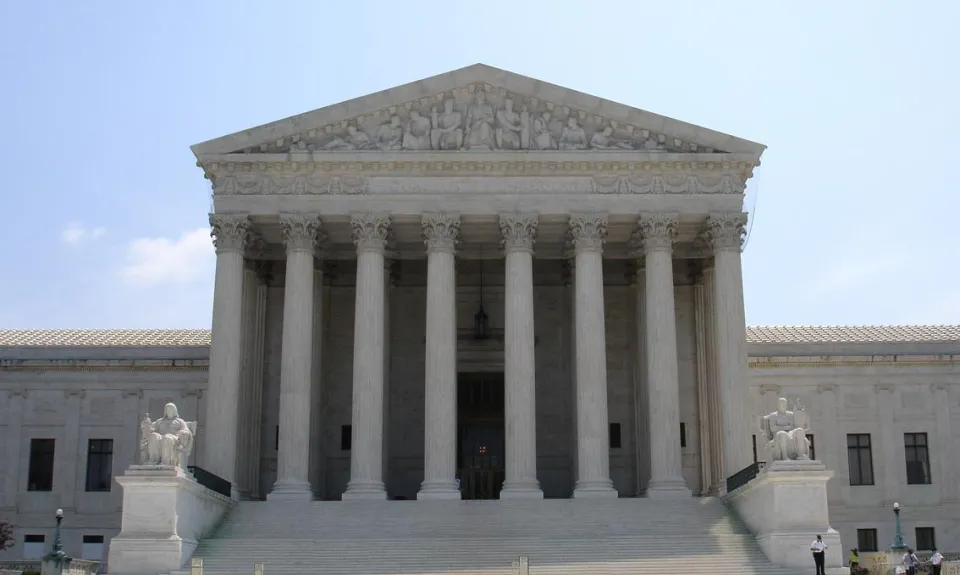
In Seven County Infrastructure Coalition v. Eagle County, five of the six MAGA justices weakened the requirement that federal agencies analyze the environmental impacts of their actions. (Justice Gorsuch was recused.)
What is an “environmental impact statement?”
An “environmental impact statement,” or EIS, is a bedrock part of protecting our environment. It is required by the National Environmental Policy Act (“NEPA”), a landmark law dating back to 1970. It requires federal agencies to assess the environmental impact of their decisions before making them. This significantly reduces the chances that a project will lead to unexpected environmental damage down the road.
What was this case about?
A railroad company and several counties in Utah want to build an 80-mile railway to connect a basin rich in natural gas, oil, and other hydrocarbon deposits to an existing rail line. That requires the approval of a federal agency called the Surface Transportation Board. The Board’s EIS did not consider either the impact of oil development in the basin or the impact of increased crude oil refining along the Gulf Coast. The question for the Court was whether the Board was required to consider those impacts.
How did the Court rule, and how is it harmful?
All nine justices agreed that an agency does not need to consider environmental effects that it doesn’t directly regulate. But the Court was divided beyond that.
Justice Sotomayor (joined by Justices Kagan and Jackson) would have stopped there. But the MAGA majority went even further.
In an opinion written by Justice Kavanaugh, the MAGA justices (except for Gorsuch) made clear their hostility to NEPA. Kavanaugh called the law a “blunt and haphazard tool” that has caused “delay upon delay,” prevented construction projects, and cost jobs. In the interests of “the American economy,” the majority declared that an agency’s EIS need only consider “the project at hand” and “need not consider the effects of separate projects” it knows its approval will lead to. The justices further told lower court judges to defer to an agency’s decision as to what counts as a separate project that should not be considered.
Justice Sotomayor condemned the majority for “unnecessarily grounding its analyses largely in matters of policy.”
The Court’s decision will let federal agencies ignore important environmental impacts of their actions and make it easier for corporate interests to get approval for projects despite the environmental damage they will likely cause. EarthJustice stated that it “undermines decades of legal precedent that told federal agencies to look before they leap when approving projects that could harm communities and the environment.”