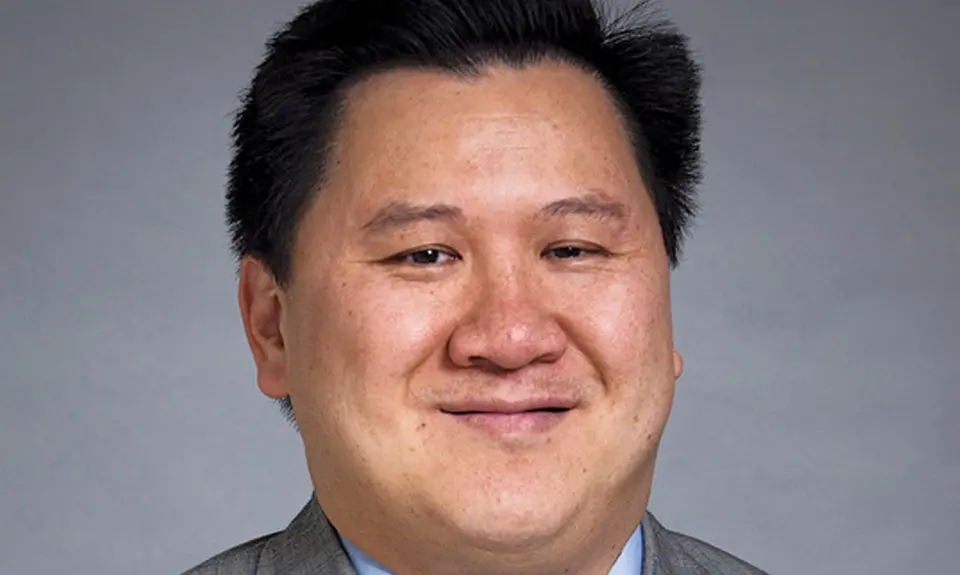
“Confirmed Judges, Confirmed Fears” is a blog series documenting the harmful impact of President Trump’s judges on Americans’ rights and liberties. It includes judges nominated in both his first and second terms.
In a dissent, Fifth Circuit Trump judge James Ho would have allowed a state university to ban drag shows. He also used his dissent to gratuitously demean transgender people, even though the case had nothing to do with trans rights. The August 2025 case was Spectrum WT v. Wendler.
What was this case about?
Spectrum WT is an LGBT+ student organization at West Texas A&M University. It was planning a drag show at a university venue called Legacy Hall to raise money for a charity working to prevent suicide among LGBT+ youth. However, University president Walter Wendler ordered the show cancelled, saying that drag denigrates women. Spectrum WT claimed that this violated its free speech rights under the First Amendment. The group held the show elsewhere, but it asked a court for a preliminary injunction to prevent the university from banning future planned performances.
District court judge Matthew Kacsmaryk denied their motion. Among other things, he held that the drag show was not clearly expressive conduct warranting any First Amendment protection. denied Spectrum WT’s motion, and the group appealed to the Fifth Circuit.
What happened at the Fifth Circuit and how would Ho have ruled?
Kacsmaryk’s decision was reversed by a panel of the Fifth Circuit in an opinion written by Leslie Southwick (a George W. Bush nominee) and joined by James Dennis (a Clinton nominee). Unlike Kacsmaryk, the panel held that the drag show was clearly intended to convey a message in support of LGBT+ rights and therefore triggered the First Amendment.
The panel next addressed the proper level of scrutiny. The university had never said that the theater could be used only for certain purposes or by certain groups. In fact, the university had routinely allowed its use by both members of the community and outside groups without censoring the content. This meant the university had designated the theater as a public forum, which triggers strict scrutiny. Since the ban on drag was focused on its content, and it was not narrowly tailored to serve a compelling state interest, it violated the First Amendment.
What did Ho say in dissent?
In dissent, Ho disagreed that the university had established the theater as a designated public forum. Instead, he would have considered it a “limited public forum,” meaning that the government had established it only for certain speakers or purposes. He justified this conclusion on the fact that forms requesting use of the theater had a general statement that the university could cancel an event if it violated school policies or regulations. But the majority noted that this is not the same as a policy limiting certain public expressions or people from the theater. Ho’s conclusion that it was a “limited public forum” meant he would have subjected it to less scrutiny than the majority. He accepted the university’s claim that drag shows are harmful to women on campus, and he would have allowed the ban.
Ho also used the dissent as an opportunity to make public his disdain for transgender people. He wrote:
Moreover, if university officials allow men to act as women in campus events like drag shows, they may feel compelled to allow men to act as women in other campus events as well—like women's sports.
Quoting from a book called “Toxic Empathy” by far-right figure Allie Stuckey, Ho wrote:
[I]f we accept that people can change genders—or even if we don't but agree to be ‘polite’ and call a man ‘she’—then why shouldn't ‘she’ be allowed to play women’s sports or bathe naked in an all-women’s space? Why shouldn’t ‘she’ be allowed to enter women’s abuse houses or be transferred to a women’s prison? Why accept one lie and not the whole thing?
The case illustrates the importance of our federal courts to protecting the rights of all people, including our freedom of speech.